Every timber transport manager has lived this scenario: a truck rolls in, the driver hands over a paper tally, and somewhere between the forest road and the log yard, the numbers don’t quite add up. Is it the load that shifted? A density estimate that was guesswork? A shipment number scrawled illegibly in the rain?
These aren’t just annoying edge cases — they’re daily friction points that slow throughput, complicate invoicing, and erode trust between buyers, haulers, and mills. The good news is that most of them are solved the moment measurement moves from paper to digital.
The logistics manager’s blind spots in timber transport
Traditional truck scaling puts measurement in the hands of either a truck-driver or someone overseeing operations. That creates three recurring problems for anyone managing a fleet or a supply chain:
Volume inconsistency. When density coefficients are estimated by eye, two scalers on the same site can produce meaningfully different volume figures for identical loads. Over a season, those discrepancies compound into real financial exposure.
Data gaps. Paper tallies capture weight or piece count — rarely both, almost never geolocation, and never a timestamped photo audit trail. When a dispute arises, there’s nothing to go back to.
Coordination lag. If the receiving mill or buyer only finds out what’s on the truck when it arrives, there’s no opportunity to sequence unloading, adjust yard inventory, or flag a discrepancy before it becomes an argument.
How Timbeter closes these gaps at the truck
Timbeter’s mobile measurement tools are built around the realities of timber transport — outdoor conditions, time pressure, mixed assortments, and the need for data that travels faster than the truck does.
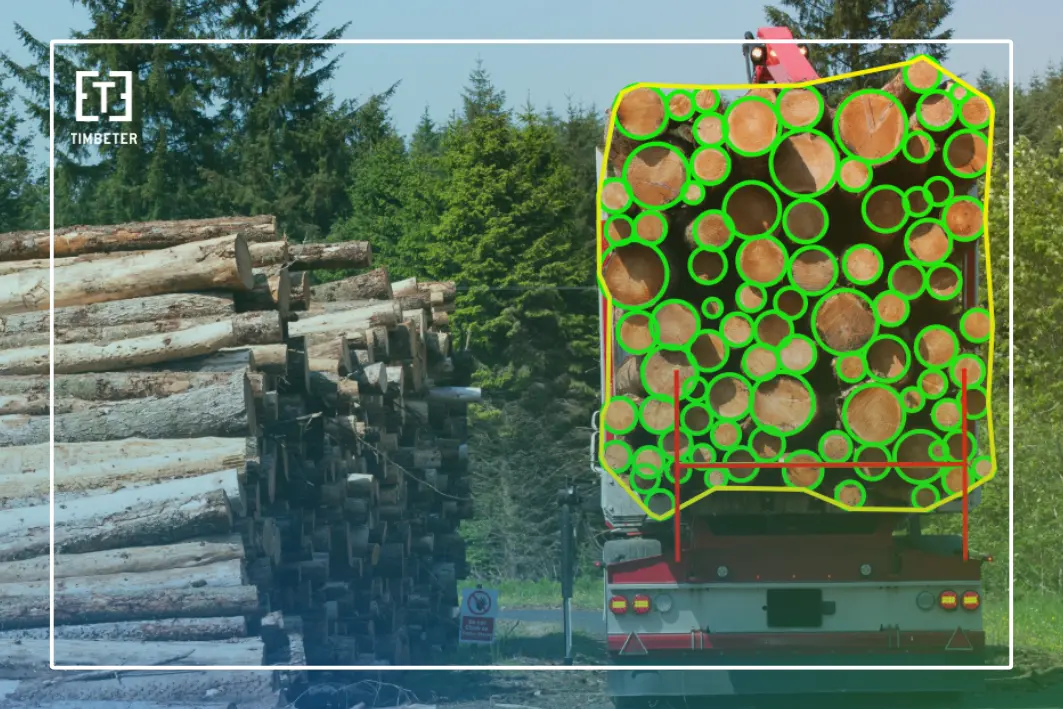
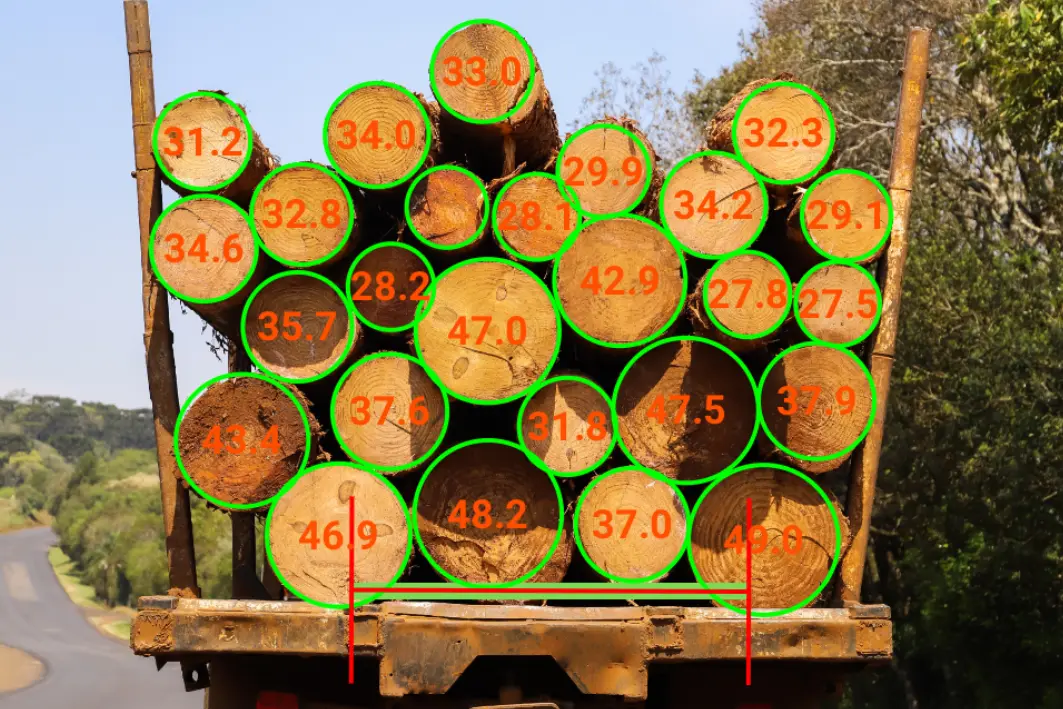
Diameter and volume measurement on arrival. For sawlogs, a single photo taken from the rear of the truck gives you per-log diameters, total log count, and calculated volume in seconds. For short logs, a side-on photo works just as well. Every measurement is timestamped, geotagged, and stored digitally — no retyping, no lost forms. Read more about the different measurement approaches in our earlier guide to truck measurement methods.
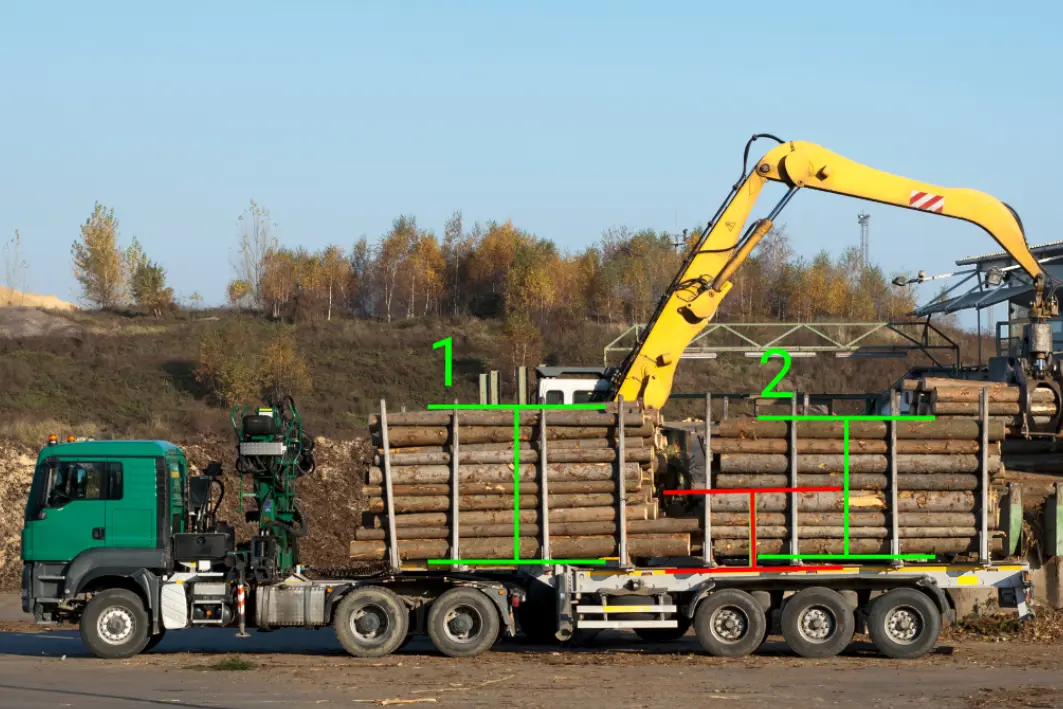
Objective density measurement for pulp and fuelwood. Rather than relying on a visual estimate of pile density, Timbeter calculates the coefficient from the actual load. That figure is then applied to the truck measurement to produce a verified volume — one that both parties can stand behind.
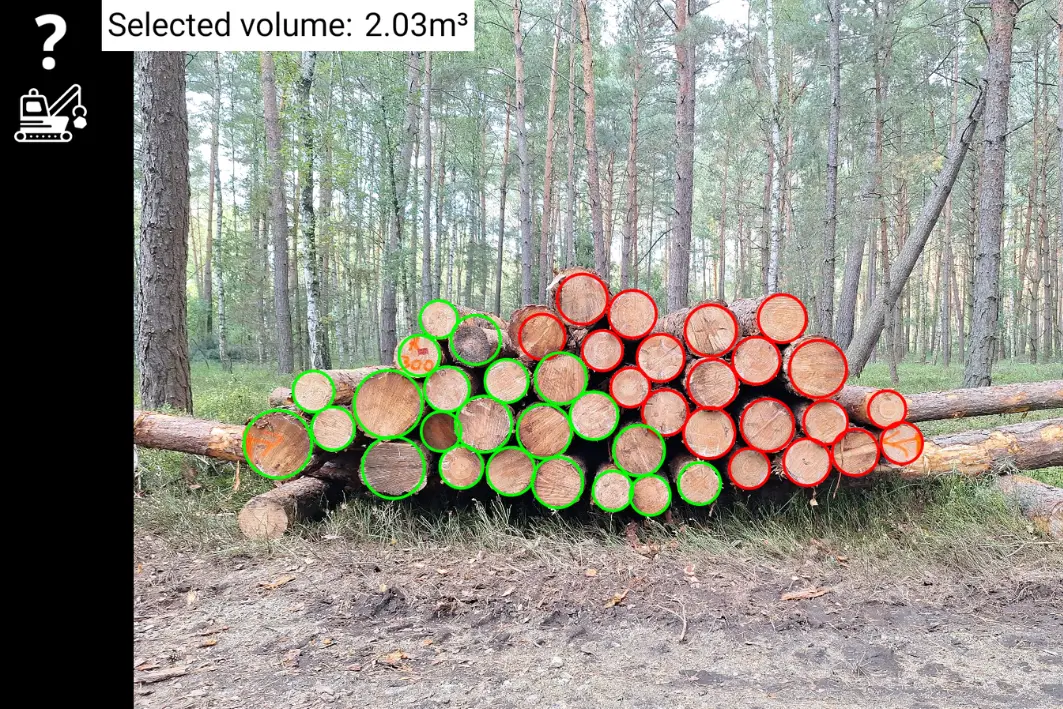
The loading tool for roadside operations. When logs are being loaded from a roadside pile onto a truck, the loading tool lets the operator digitally mark and track exactly which volume from the pile has been assigned to each vehicle. Overloading — which creates road compliance risk and machinery wear — is flagged before the truck leaves the site.
Custom fields for full shipment traceability. Every measurement can be tagged with the truck’s licence plate, shipment number, driver name, and any other field your operation requires. For logistics managers, this means every load has a clean, searchable record from first measurement to final delivery — and filtering by plate number or shipment ID takes seconds in the dashboard.
Real-time sharing and dashboard visibility. The moment a measurement is taken, the data is available in Timbeter’s web dashboard. Receiving teams get volume and assortment data before the truck arrives. Managers get an accurate, live picture of incoming and outgoing volumes without chasing drivers for paperwork. Results can also be shared instantly via email or shareable link — useful for buyers, auditors, or cross-border shipments where documentation requirements are strict. For a full breakdown of how these use cases work in practice, see our post on different uses of Timbeter for truck measurement.
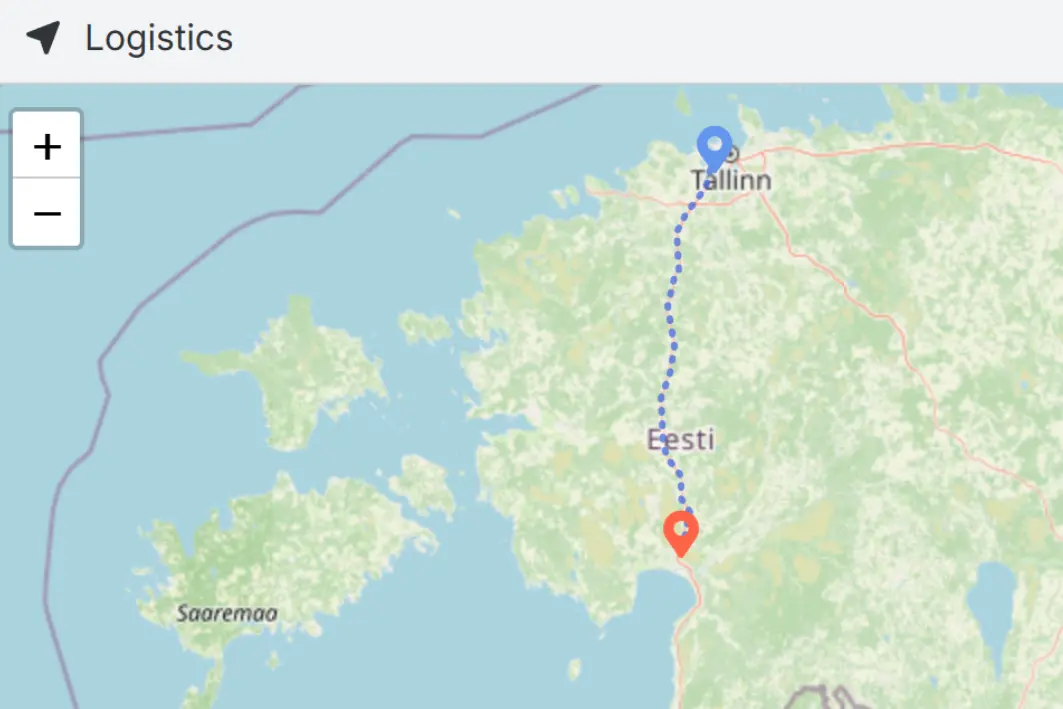
Logistics tracking: real-time truck movement from load to delivery. Once a truck load has been measured, the driver can activate Timbeter’s logistics tracking module directly in the app. From that point, the truck’s route is monitored in real time and visible on the dashboard — giving logistics managers live visibility over every active shipment without a separate tracking system. The full data set for each trip — volume, assortments, licence plate, and precise start and end coordinates — is automatically recorded and available for reporting. For operations supplying European markets, this is also directly relevant to EUDR compliance: the regulation requires geo-localisation data (latitude, longitude, date, and time range) for the plots where timber was harvested, and Timbeter’s tracking module captures the route and origin coordinates as part of the standard workflow. No manual coordinate entry, no separate compliance tool.
The sustainability case for better truck data
Accurate load data has a quiet sustainability benefit: it reduces unnecessary trips. When you know precisely what volume is on each truck, you can optimise load fill rates, reduce deadhead kilometres, and avoid repeat journeys caused by disputes or miscounts. Fewer truck movements per cubic metre of timber delivered means lower emissions per unit. Timbeter’s logistics tracking module takes this a step further — it automatically calculates the CO₂ footprint for each route, giving companies a concrete, per-shipment emissions figure rather than an estimate. That data increasingly matters to corporate buyers, sustainability auditors, and certification bodies who need verified evidence, not approximations.
What changes when measurement goes digital
For logistics managers, the shift to digital truck measurement isn’t primarily about the measurement itself — it’s about what that measurement unlocks. Disputes get resolved with evidence rather than negotiation. Invoicing becomes faster and cleaner. Fleet scheduling improves when incoming volume data is reliable. And the accountability that used to depend on the most diligent person on site gets built into the process itself.
Take control of your timber truck data.
Replace paper tallies with verified, real-time measurements and full shipment traceability. See how Timbeter improves accuracy and visibility across your logistics workflow.